


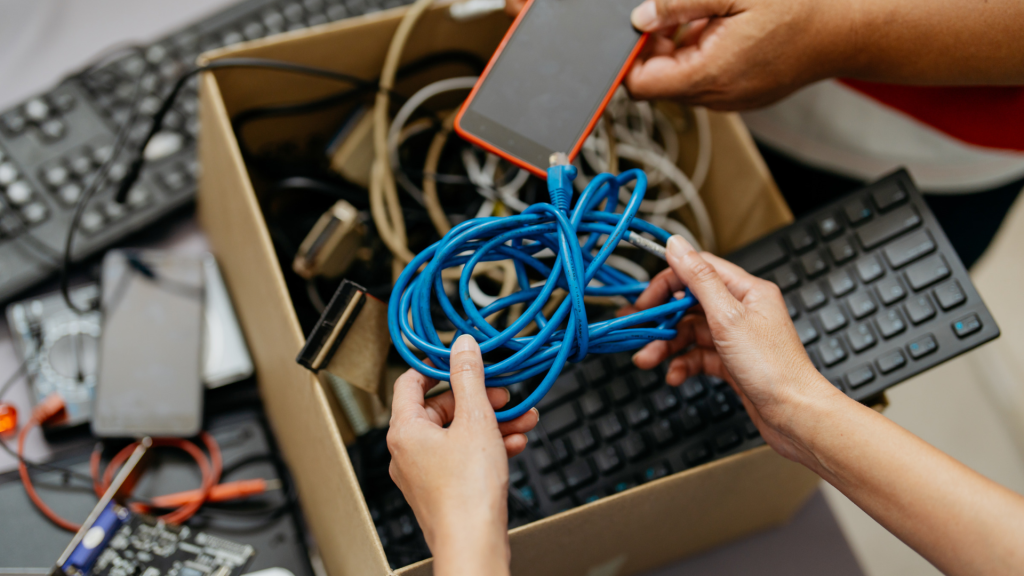
The holiday season often brings new technology into homes and workplaces. A new laptop, smartphone, television, or gaming console can be a welcome upgrade, but it also raises a practical question: what should you do with the device it replaces?
Old electronics have a way of accumulating in storage rooms, office closets, and desk drawers. Some still work but are no longer needed, while others are outdated, damaged, or too difficult to repair. Leaving them unused indefinitely or throwing them in the regular trash is not an ideal solution.
Responsible electronics recycling, also known as e-cycling, gives unwanted devices a more sustainable end-of-life option. It helps recover useful materials, reduces the amount of electronic waste sent to landfills, and provides a way to manage devices that may contain sensitive information.
For households and businesses in Ohio and West Virginia, understanding what can be recycled and how to prepare devices is a good first step toward clearing out old technology responsibly.
Why Is It Important to Recycle Old Electronics?
Electronic devices contain a combination of materials, including plastics, glass, and metals. Some components contain valuable resources that can be recovered and reused in manufacturing. Others may contain substances that require careful handling.
When electronics are discarded improperly, recyclable materials can be lost, and potentially harmful components may create environmental concerns. Recycling helps keep these materials in the appropriate recovery and disposal process.
The U.S. Environmental Protection Agency (EPA) explains that recycling electronics helps conserve natural resources and reduce pollution associated with extracting and manufacturing new materials. Recovering metals such as copper, gold, and silver also reduces the need to obtain all these resources through new mining.
There is another important consideration: data security. Computers, smartphones, storage devices, and other electronics can retain personal, financial, or business information long after they stop being used. Responsible disposal should account for both the physical device and the information stored inside it.
What Electronics Can Be Recycled?
Not every electronic item belongs in a household recycling bin. Dedicated electronics recycling services accept specific devices and components, depending on their processing capabilities.
Gator Shredding offers e-cycling for a range of electronics used by households and businesses. Its accepted items include computers, laptops, monitors, printers, televisions, cell phones, game consoles, keyboards, mice, routers, modems, speakers, cables, circuit boards, servers, and other IT and consumer electronics.
The service also lists items such as CDs, MP3 players, video games, satellite boxes, telecom equipment, small household equipment, ink and toner cartridges, and certain light bulbs, including small fluorescent bulbs. Batteries are accepted with the exception of alkaline batteries.
This range makes e-cycling useful for more than just old computers. A business replacing its office equipment may have monitors, printers, networking hardware, and other technology to clear out. A household upgrading its entertainment system may have an older television, speakers, gaming equipment, and cables that need a responsible destination.
If you are unsure whether a particular item is accepted, contact Gator Shredding before arranging service. The team can confirm accepted materials and discuss pricing, appointments, and pickup options.
How to Prepare Electronics Before Recycling
Before handing over old electronics, take a little time to prepare them. This is particularly important for devices that have been used to store personal or confidential information.
1. Back Up Important Files
Check whether the device contains photos, documents, contacts, or other files you want to keep. Transfer important information to a secure backup location before retiring the device.
For business equipment, follow your organization’s IT and records-management procedures. Work-related files should be handled according to company policy rather than treated like ordinary personal data.
2. Protect Your Personal and Business Information
Deleting a few files or moving them to the recycle bin does not necessarily remove all stored information. Before recycling a computer, laptop, or smartphone, use the manufacturer’s recommended data-erasure process where appropriate.
The U.S. EPA’s electronics recycling guidance recommends deleting personal information before donating or recycling electronic devices. For business equipment or devices containing sensitive information, consider whether physical destruction of the storage media is more appropriate.
Gator Shredding offers hard drive destruction alongside its e-cycling service. When a computer or other device is being retired, Gator can remove and destroy internal storage media, including hard drives and other listed storage components, before the remaining equipment is recycled. This provides an additional option for organizations that need to address information security as part of their equipment disposal process.
3. Check Batteries and Accessories
Some electronics contain batteries that require separate handling. The EPA advises consumers to remove batteries where possible and notes that lithium-ion batteries and devices containing them should not be placed in household garbage or recycling bins.
Gator’s accepted-items list includes batteries but specifically excludes alkaline batteries. Because battery types and handling requirements differ, check with the service provider before bringing or arranging collection of batteries and battery-powered equipment.
Keep chargers, cables and accessories together where practical. These items may also be recyclable, depending on the materials accepted.
4. Separate Devices You Plan to Reuse
Not every old device needs to be recycled immediately. If a computer, phone, or monitor is still in good working condition, consider whether it can be reused, donated, or repurposed. Extending a device’s useful life can reduce the need for new equipment.
If it is no longer functional, outdated, or unsuitable for reuse, electronics recycling is a more responsible next step than leaving it unused or disposing of it with ordinary waste.
How Does Professional E-Cycling Work?
Professional e-cycling involves more than collecting unwanted electronics. Devices are sorted and directed through a recycling process designed to recover usable materials and separate components that require special handling.
Gator Shredding’s published process begins with sorting electronic waste by device type and sending it to a designated recycling centre in the United States. Larger components are separated, and materials such as glass and metals are recovered. Other materials are processed and sorted into categories such as plastic, steel, and aluminum so they can be returned to manufacturing supply chains.
For devices containing storage media, Gator’s e-cycling service can be paired with hard drive destruction. This is particularly relevant for businesses retiring computers, servers, and other IT equipment that may contain confidential information.
Where Can You Arrange Electronics Recycling in Ohio and West Virginia?
If you are clearing out old technology before the end of the year, planning ahead can make the process easier. Instead of allowing unused electronics to accumulate in storage areas, identify the equipment you no longer need and confirm which items can be accepted for recycling.
Gator Shredding serves businesses and residents across the Mid-Ohio Valley and surrounding communities in West Virginia and Ohio, including Parkersburg, Vienna, Marietta, Belpre, Athens, Charleston, and other listed service areas.
Whether you are replacing a few household devices or organizing a larger business equipment cleanout, Gator’s e-cycling service offers a way to manage eligible electronics responsibly. If the equipment contains hard drives or other storage media, ask about combining electronics recycling with hard drive destruction.
Give Your Old Electronics a Responsible Next Step
A new device should not mean another forgotten computer, phone, or television sitting in a closet. Before the holiday season gets busy, take stock of the electronics you no longer use, protect any information stored on them, and find out how they can be recycled.
Gator Shredding provides e-cycling and hard drive destruction services for customers across its West Virginia and Ohio service areas. Contact Gator Shredding to confirm accepted electronics, discuss pricing, and arrange an e-cycling appointment or pickup.